
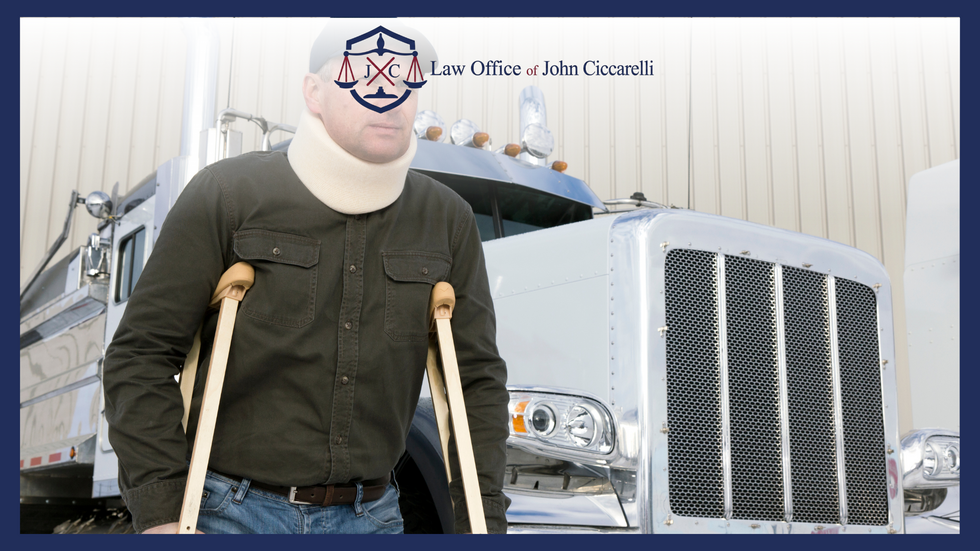
Executive Summary: California truck accident victims may pursue compensation when another party's negligence causes catastrophic injuries. Drivers, trucking companies, and other businesses may be responsible, depending on the evidence. Claims involving permanent injuries require careful attention to liability, future medical needs, lost earning capacity, and long-term harm.
A broken bone may heal. A spinal cord injury may never heal.
That difference changes everything about a truck accident claim.
When someone suffers a permanent injury, the costs do not stop when they leave the hospital. Treatment may continue for years. Work may no longer be possible. A person who once lived independently may need daily assistance.
The law allows injured people to seek compensation when someone else's negligence causes that harm. But in a catastrophic truck accident case, proving who caused the collision is only part of the job.
The other part is understanding what the injury will cost over a lifetime.
What Counts as a Catastrophic Injury?
California law does not require an injury to carry the label catastrophic before someone can file a personal injury lawsuit.
The term generally describes severe injuries that cause major, lasting changes to a person's health or ability to function.
Examples include:
-
Traumatic brain injuries that affect memory, speech, or judgment
-
Spinal cord injuries that cause paralysis
-
Severe burns requiring repeated treatment
-
Amputations or permanent loss of limb function
-
Multiple fractures that result in lasting disability
Some people can return to work after months of recovery. Others may never return to their previous jobs.
The difference can mean millions of dollars in future medical care and lost earnings over a lifetime, depending on the injury and the person's circumstances.
You can't ignore that future when evaluating a claim.
Who Can Be Sued After a Truck Accident?
A commercial truck accident may involve several responsible parties.
The truck driver. Speeding, distracted driving, unsafe lane changes, and driving while fatigued can support a negligence claim when they contribute to a crash.
The trucking company. A company may be responsible for an employee driver's negligence. It may also face a separate claim if its own conduct contributed to the collision, such as inadequate maintenance or unsafe hiring practices.
Other businesses. A maintenance contractor, equipment manufacturer, or another party may share responsibility when the evidence supports it.
The fact that a truck was involved does not automatically establish liability against everyone connected to it.
Each claim requires proof of what a party did wrong and how that conduct caused the injury.
What Evidence Can Reveal Why the Crash Happened?
The police report is a starting point.
It is rarely the end of the investigation.
Commercial trucks may have records that passenger vehicles do not. Depending on the vehicle and circumstances, these can include electronic driving logs, maintenance records, inspection reports, and electronic vehicle data.
The investigation may also involve photographs, surveillance footage, witness statements, and driver employment records.
Federal regulations limit driving hours for many commercial truck drivers. The Federal Motor Carrier Safety Administration's hours-of-service rules help explain the restrictions that may apply when fatigue is suspected.
A violation does not automatically prove that fatigue caused a collision. The evidence still has to connect the conduct to the crash.
Identify and preserve records promptly. Some electronic information can be overwritten, and witnesses' memories can fade.
How Do You Calculate the Cost of a Permanent Injury?
A catastrophic injury claim requires more than adding up medical bills.
The investigation must consider the injured person's future.
Will additional surgeries be needed? Can the person return to work? Will the home need to be modified? Is daily nursing care likely?
These questions may require input from treating physicians, rehabilitation professionals, and people who assess future care needs.
California generally permits recovery of proven economic losses, including future medical expenses and lost earning capacity. Noneconomic damages may also be available for physical pain, emotional suffering, and loss of enjoyment of life.
The California civil jury instructions on noneconomic damages describe the types of personal harm a jury may consider.
The goal is not to guess at a large number. It is to support the claim with reliable evidence.
What If You Were Partly Responsible for the Accident?
California follows a comparative fault system.
Under Li v. Yellow Cab Co., an injured person's compensation can be reduced by their share of responsibility.
For example, if a jury finds that an injured person was 20% responsible, the damages awarded would generally be reduced by 20%.
Being partly responsible does not automatically prevent recovery.
How Long Do You Have to File a Lawsuit?
Most California personal injury lawsuits must be filed within two years of the injury under Code of Civil Procedure § 335.1.
Different deadlines and procedures may apply, including when a government entity is involved.
Waiting also creates a practical problem: evidence that could explain the collision may become harder to obtain.
A Serious Injury Deserves More Than a Quick Settlement
A settlement should reflect the injury a person will live with, not simply the bills that have already arrived.
At the Law Offices of John K. Ciccarelli, nearly 40 years of trial experience inform the investigation of serious injury claims. The approach is to examine the evidence, challenge unsupported explanations, and pursue accountability when negligence has caused lasting harm.
If you or a loved one suffered a catastrophic injury in a truck accident, contact the firm to discuss what happened and your legal options.
A permanent injury cannot be undone. Its future consequences should not be overlooked.
FAQs
Can I sue a trucking company after an accident?
Yes, depending on the facts. A trucking company may be responsible for its employee's negligence or for its own unsafe practices.
What injuries are considered catastrophic?
Catastrophic injuries generally involve severe, lasting harm, such as paralysis, traumatic brain injury, amputation, or permanent disability.
Can I recover compensation for future medical care?
Yes. California law generally allows recovery of reasonably certain future medical expenses caused by the injury when supported by evidence.
What if the truck driver says I caused the accident?
The driver's account is not conclusive. Physical evidence, witness statements, and other records can help establish fault. California's comparative fault rules may still allow recovery if you share some responsibility.
How long do I have to sue after a truck accident in California?
The general deadline is two years, but exceptions and shorter claim deadlines may apply. An attorney can assess the deadline for your situation.

Comments
There are no comments for this post. Be the first and Add your Comment below.
Leave a Comment